What is POS System & How It Works? A Complete Guide for Indian Businesses
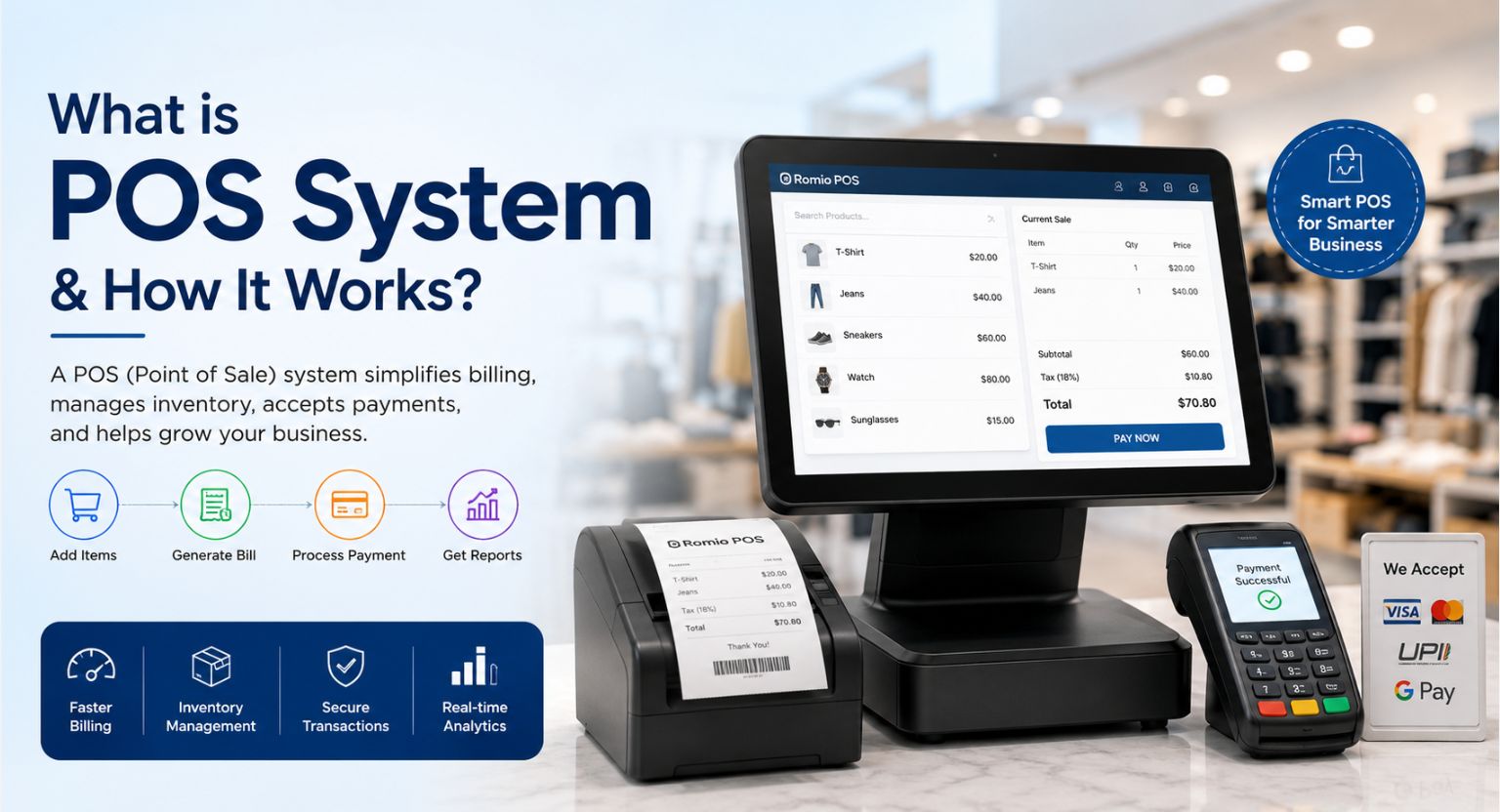
Whether you run a retail shop in Delhi, a food court in a Mumbai mall, or a hospital pharmacy in Bengaluru — you need a fast, accurate, and GST-compliant billing solution. That solution is a POS system.
In this guide, you will learn what is POS system, its meaning, how a POS machine works, what it costs in India, and why thousands of businesses across India are switching to modern POS solutions.
What is POS System?
What is POS system (Point of Sale system) is a combination of hardware and software that allows a business to complete sales transactions, manage inventory, generate GST bills, and track business performance all from one central platform.
it is the modern, digital replacement for a traditional cash register.
POS System Meaning – Breaking It Down Simply
POS stands for (Point of Sale) meaning the exact place and moment where a customer pays for a product or service.
A complete POS system includes:
– A touchscreen terminal or tablet (to enter and process orders)
– A barcode scanner (to read product codes)
– A receipt printer (to generate bills)
– A cash drawer (to manage cash payments)
– A card/UPI payment reader (to accept digital payments)
– POS software (the brain that connects everything)
Together, these components make every sale fast, accurate, and fully recorded.
Book a Free Demo See how our POS system works live for your business type.
How Does a POS Machine Work? (Step-by-Step)
Understanding how a POS machine works is simple once you see the process step by step.
Key Components of a POS System
A complete POS setup consists of both hardware and software.
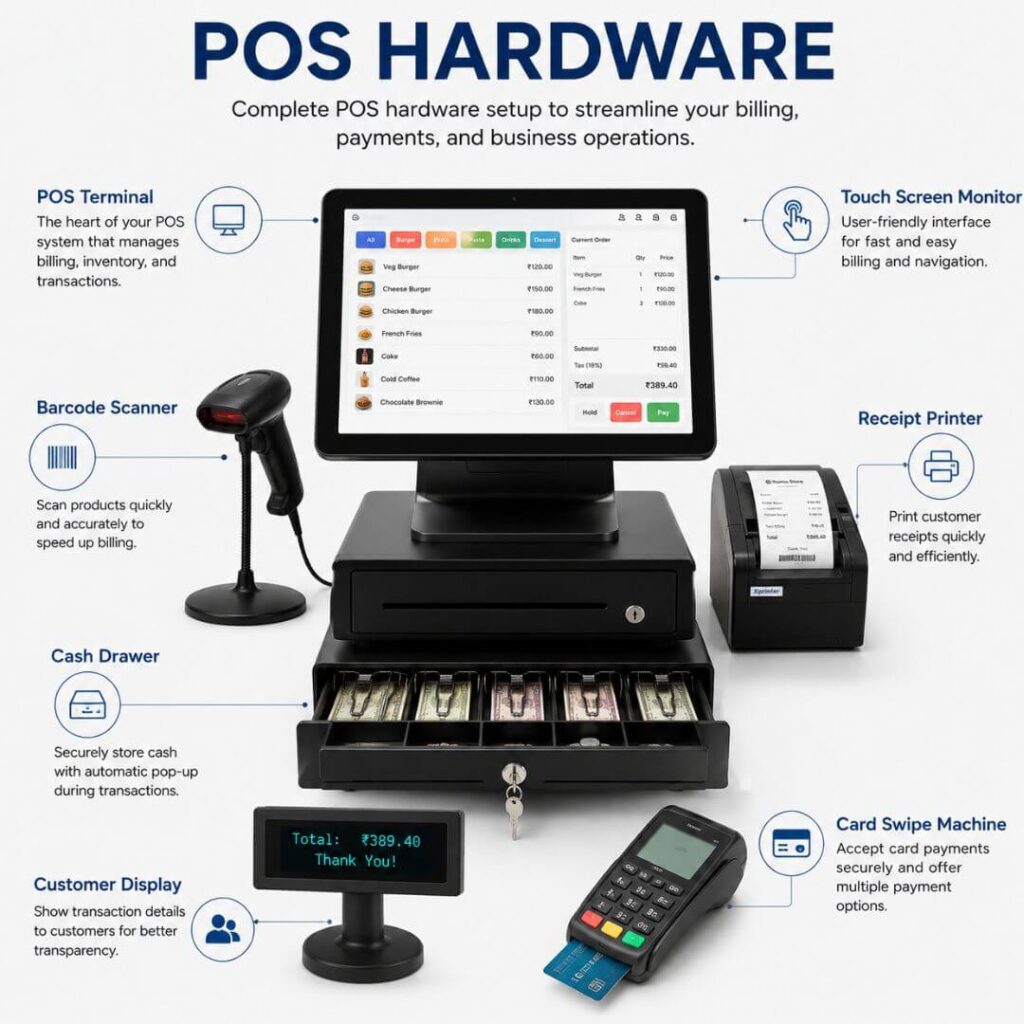
- POS Terminal
- Touch Screen Monitor
- Barcode Scanner
- Receipt Printer
- Cash Drawer
- Customer Display
- Card Swipe Machine
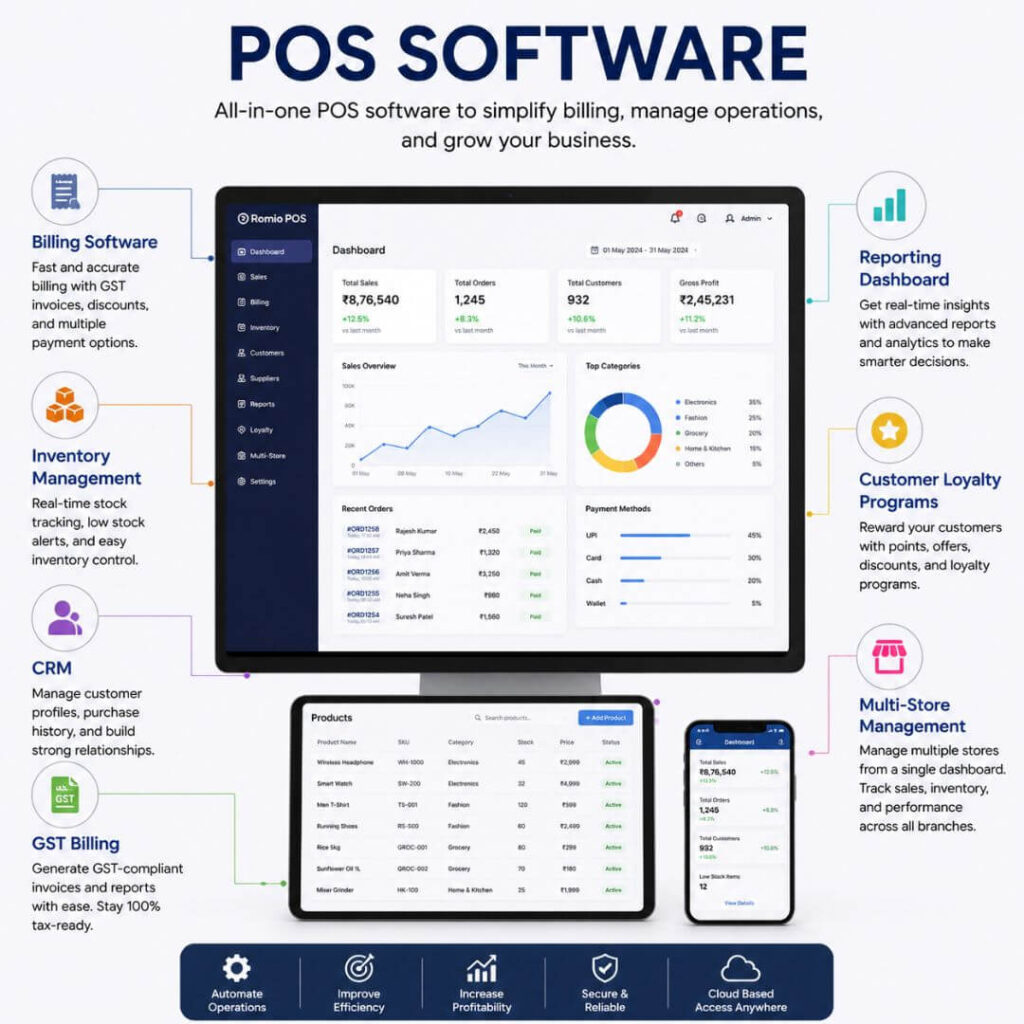
- Billing Software
- Inventory Management
- CRM
- GST Billing
- Reporting Dashboard
- Customer Loyalty Programs
- Multi-Store Management
Benefits of Using a Romio POS System
Modern businesses rely on POS technology because it improves efficiency and accuracy.
Retail POS System India: Why Businesses Need It
The demand for Retail POS System India solutions has grown rapidly due to digital payments and GST compliance requirements.
Retail businesses across India use POS systems to manage:
- Supermarkets
- Grocery Stores
- Fashion Stores
- Electronics Shops
- Pharmacies
- Department Stores
A cloud-based retail POS system allows owners to monitor business operations from anywhere.
POS Systems for Different Industries
Retail Stores
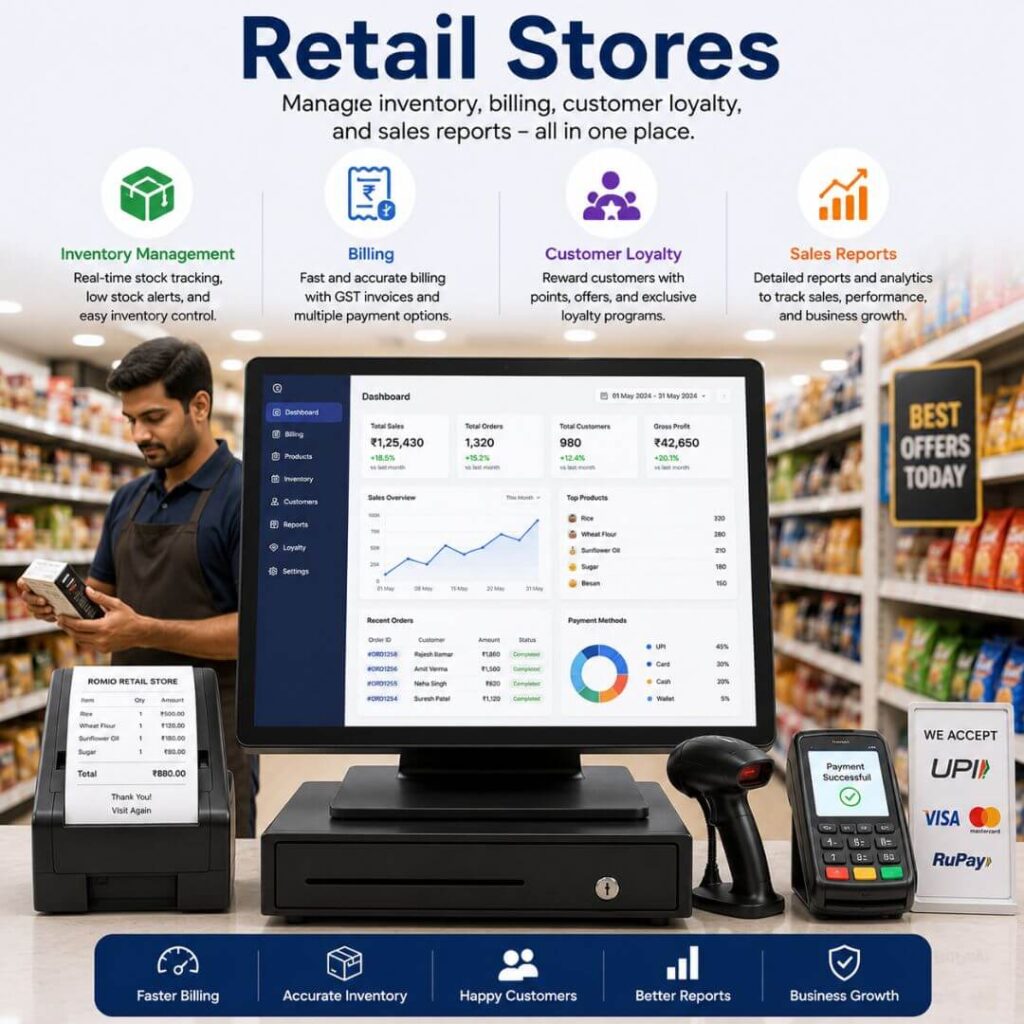
Manage inventory, billing, customer loyalty, and sales reports.
Restaurants
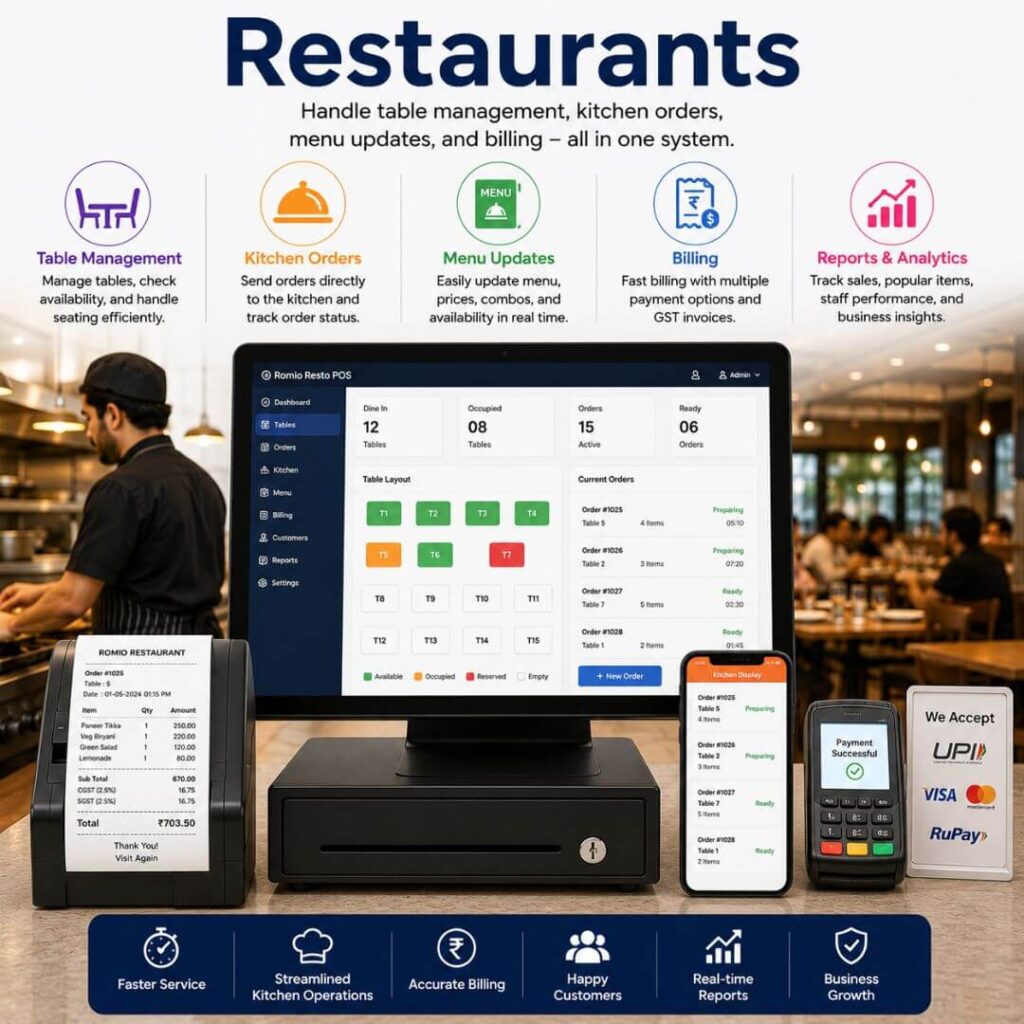
Handle table management, kitchen orders, menu updates, & billing.
Shopping Mall Food Courts
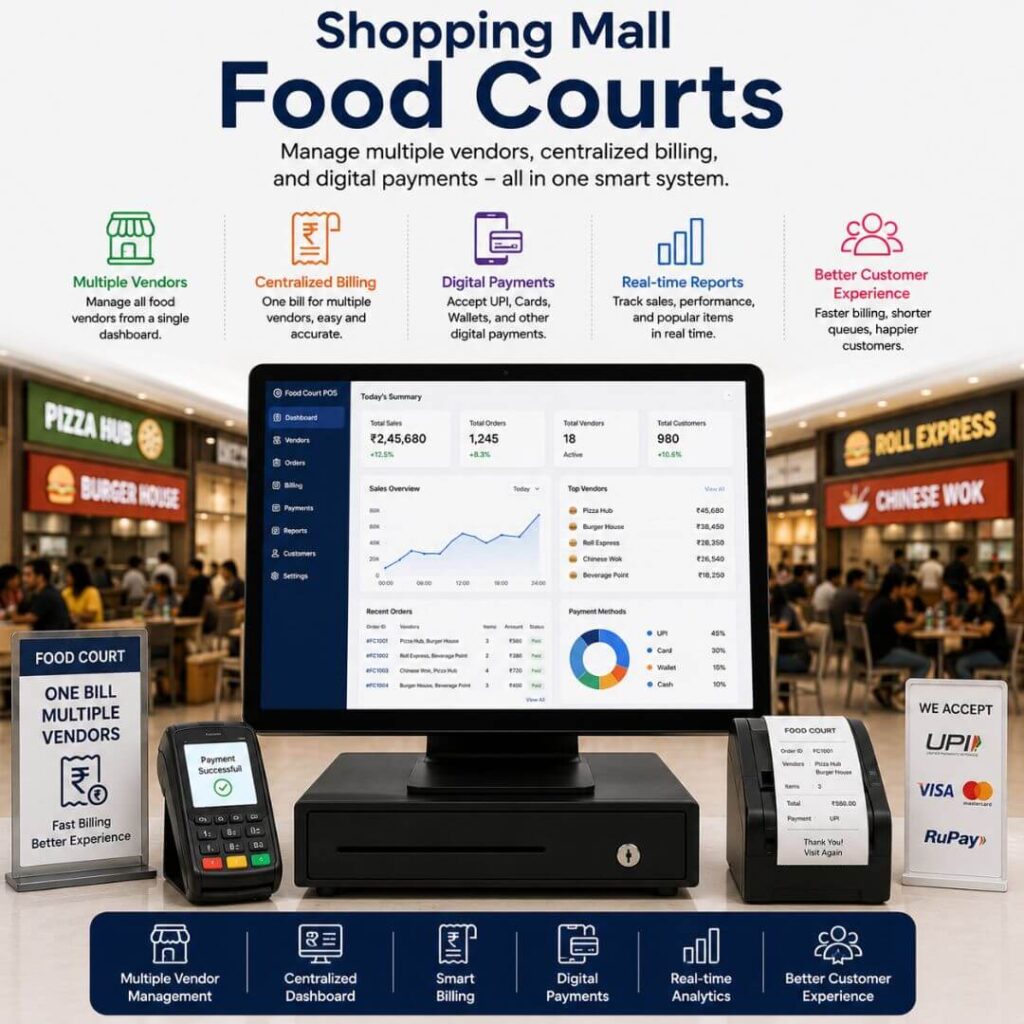
Manage multiple vendors, centralized billing, and digital payments.
Airports
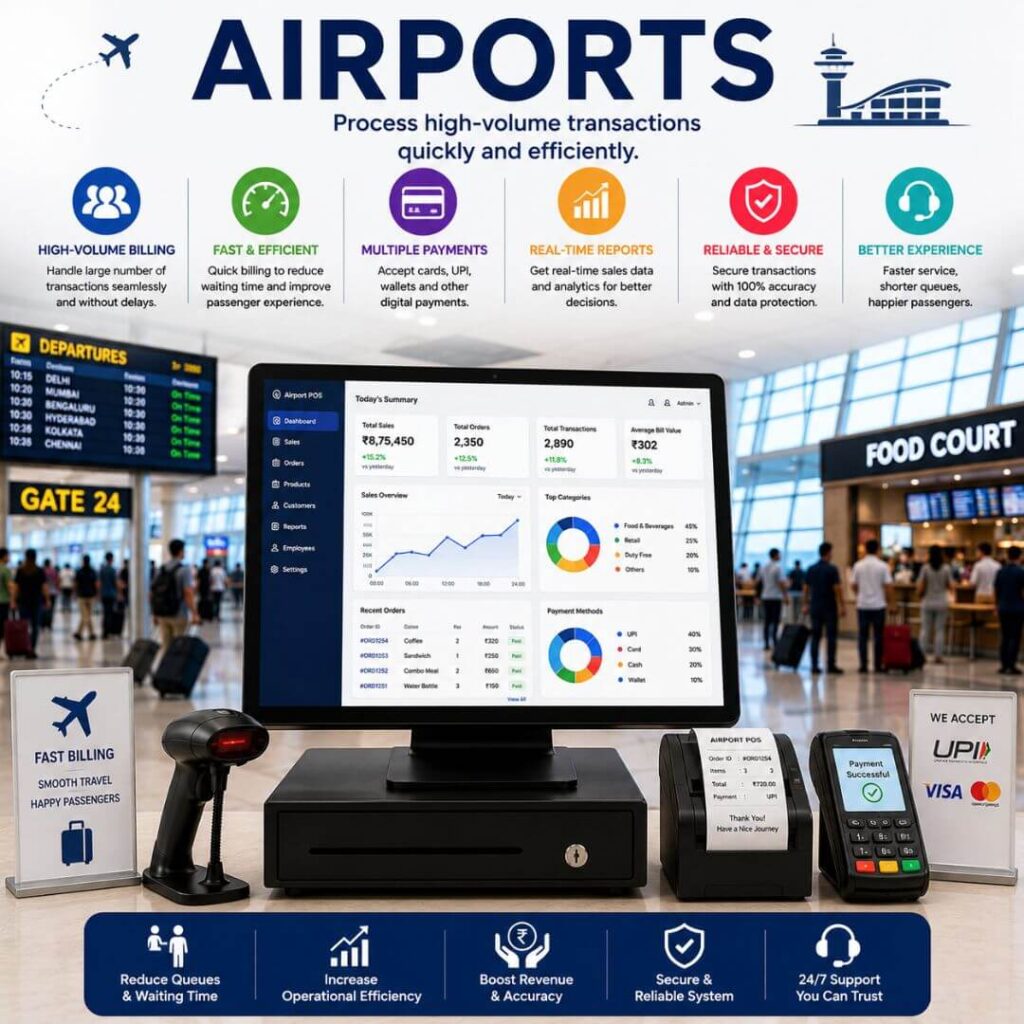
Process high-volume transactions quickly and efficiently.
Hospitals
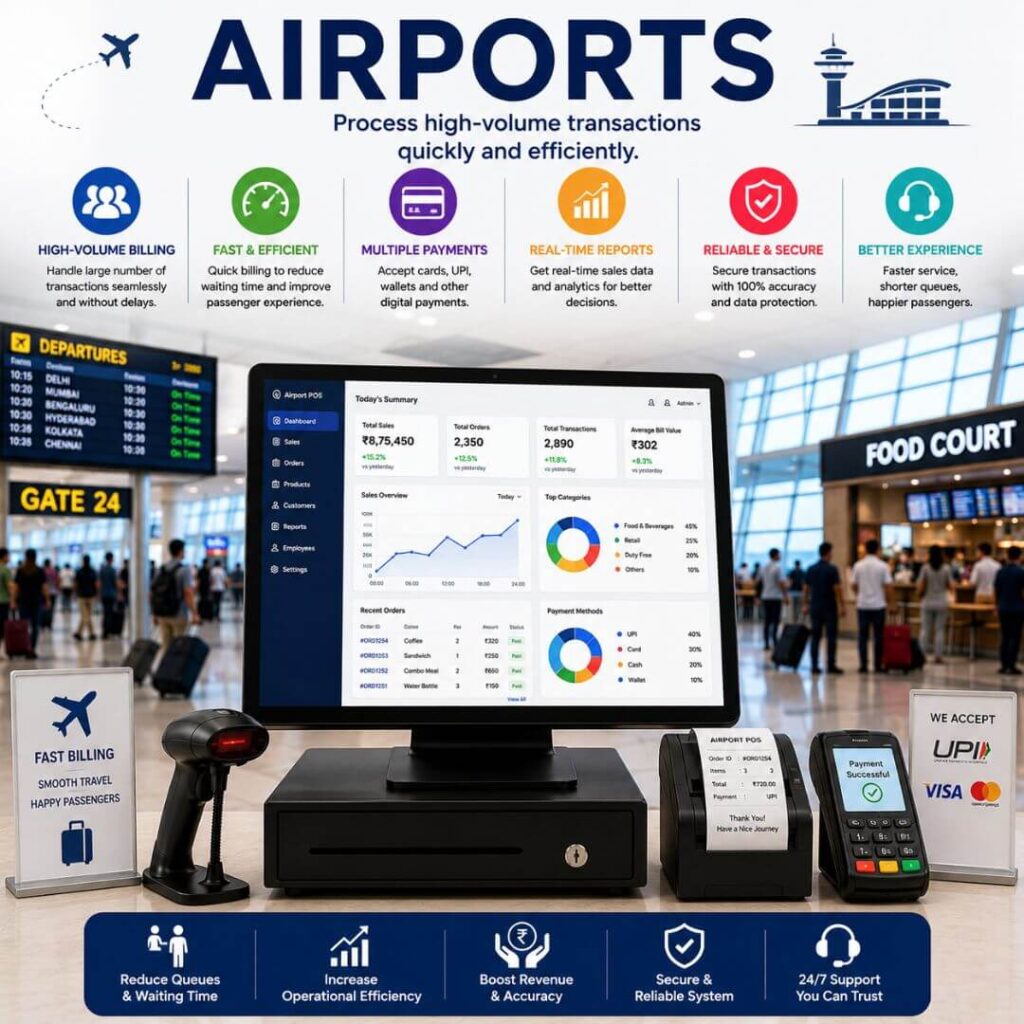
Handle pharmacy sales, cafeteria billing, & inventory management.
Corporate Food Courts
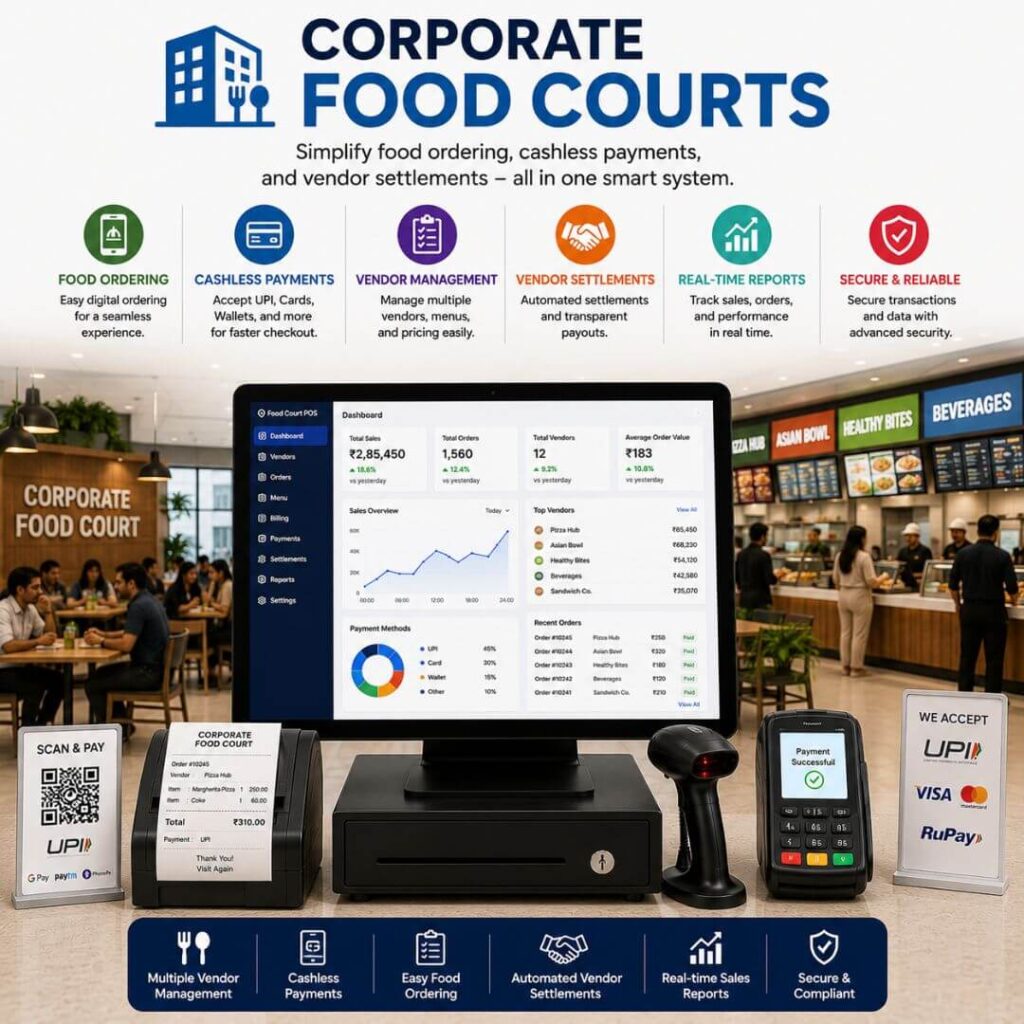
Simplify food ordering, cashless payments, and vendor settlements.
POS Billing Machine Price in India
One of the most searched queries is (POS billing machine price) in India. Here is a realistic pricing breakdown:
Budget Segment (₹8,000 – ₹20,000)
Basic Android-based POS terminals with receipt printer and barcode scanner. Ideal for small kirana stores, medical shops, and local retailers.
Mid-Range Segment (₹20,000 – ₹60,000)
Full-featured POS machines with touchscreen, integrated card reader, inventory management, and GST billing. Best for restaurants, fashion retail, and grocery chains.
Enterprise Segment (₹60,000 – ₹2,00,000+)
High-performance POS systems with cloud sync, multi-store management, analytics dashboard, CRM integration, and 24/7 support. Suited for shopping malls, hospitals, airports, and universities.
Note: Monthly SaaS-based POS software subscription plans start from ₹1,000 to ₹2,000/month, making enterprise-level features affordable even for small businesses.
POS System Features Every Business Should Look For
When selecting a POS system, consider these essential features:
Cloud-Based Access
Access business data anytime from any device.
Inventory Management
Track stock levels and receive low-stock alerts.
Customer Loyalty Programs
Increase repeat business through rewards and offers.
Analytics Dashboard
Monitor sales trends and business performance.
GST Billing
Generate GST-compliant invoices and reports.
Multi-Location Management
Manage multiple branches from a centralized platform.
Digital Payments
Accept UPI, cards, wallets, and contactless payments.
Traditional Billing vs POS System
See exactly what you gain by switching to a modern POS.
| Feature | Traditional | POS system |
|---|---|---|
| Billing speed | ✗ Slow | ✓ Under 5 seconds |
| GST compliance | ✗ Manual | ✓ Automatic |
| Inventory tracking | ✗ Manual count | ✓ Real-time |
| Sales reports | ✗ Not available | ✓ Instant dashboard |
| UPI / card payments | ✗ Cash only | ✓ All modes |
| Multi-store control | ✗ Not possible | ✓ Centralized |
Why Businesses Choose Modern POS Solutions
Businesses today require more than simple billing software. They need a complete business management platform that helps improve efficiency, customer experience, and profitability.
A modern POS system offers:
- Centralized operations
- Faster billing
- Inventory automation
- Customer loyalty programs
- Real-time reporting
- Digital payment support
- Multi-location management
- Better decision-making
Conclusion
Looking for a modern POS system for your retail store, restaurant, food court, hospital, airport outlet, or shopping mall business?
A feature-rich POS solution can help streamline billing, inventory management, customer engagement, and reporting from a single platform.
Talk to our experts and discover how the right POS system can help grow your business.